
We had 3 balloons prepped and managed two successful launches from the park just East of Milpitas California in grid square CM97bk. All of the balloons were prepped Yokohama 32″ super pressure type and prefilled for the necessary lift. All of the boards used were AG6NS v0.3 hardware and each had a new solar configuration. NI6D-12 got us started with a hand assembled array of 8 inexpensive solar wafers soldered together. The balloon was filled with Helium for 6 grams of free lift.

The launch was successful with a light ground wind and had a steady ascent at 09:32am local time on July 2nd 2023. Good tracking data was being received and reported by WSPR stations and it looks to have concluded it’s first day of flight at 36,000′ having crossed in to Nevada at getting to grid square DM18gd reporting 4.7v with a sun angle dropping below 21 degrees on the horizon.

Early in the voyage reporting above 24,000′ and heading East. Tracking displayed from aprs.fi as collected and relayed by AMSAT Argentina.
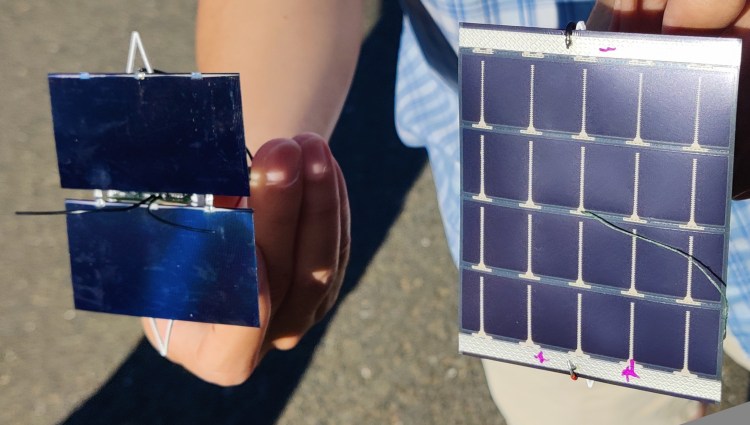
Next up was AG6NS-13 pictured on the left with two tiny solar cells that were fabricated in Japan and acquired at a local Electronics Flea Market having originally been destined for a satellite some years ago. The panel on the right is a single PowerFilm flexible panel that have typically been flown as a pair on previous flights. This one was destined to launch as W6MRR-28, however a nick in the balloon scrubbed the attempted launch today.
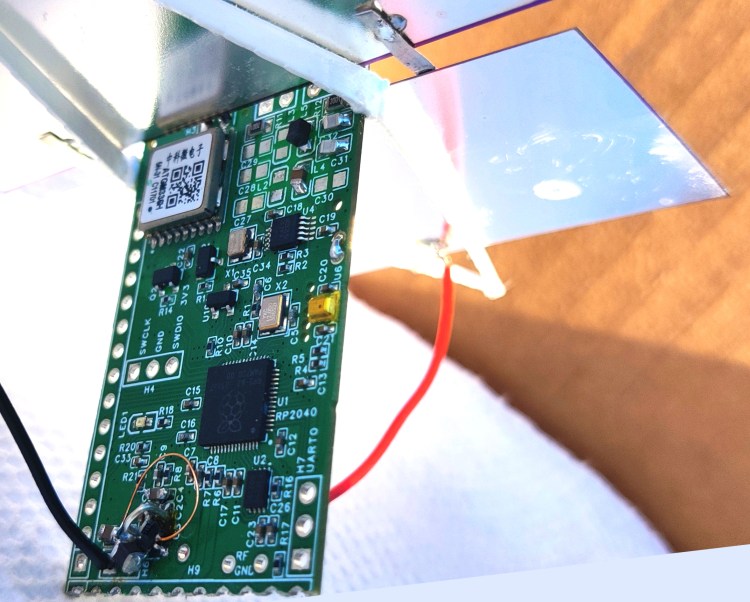
This had an extra experimental hardware modification, pictured lower left of image, to test boosting the combined 1 volt of the cells to 3.3v. The 34 gauge magnet wire was trailed out and the balloon was successfully launched at 10:00am. The solar cells are extremely fragile and snap even with a light touch. Fortunately the survived a brief impact with the grassy field during the release.
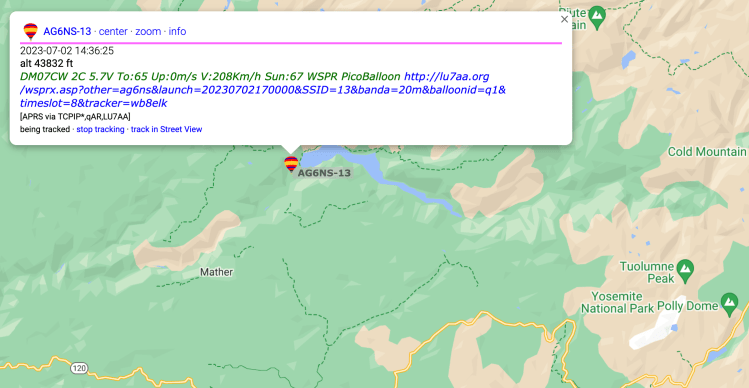
The balloons were both seen shortly after via telemetry. AG6NS-13 with the Hydrogen filled balloon with a bit extra lift had quickly ascended approaching 44,000′. It also crossed in to Nevada on a slightly Southern parallel track. The boosted cell configuration has reported a bit further East at the end of the first day with a lower sun angle below 17 degrees from grid DM17nr. Both balloons achieved an average of over 50 Km/h in the initial 10 hours of flight.
While we weren’t able to set a new record of three launches in a single day, we did get three RP 2040 Pico Balloon’s simultaneously aloft and transmitting. Over the last week K6EAU-11 has gone from the middle of the North Pacific Ocean to starting it’s third crossing of the Atlantic. It crossed most of the United States in 48 hours with a brief trip in to Canada over the Great Lakes.
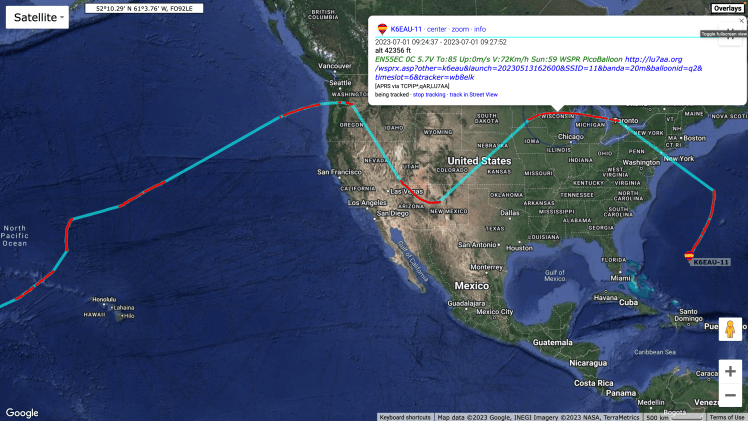
It ended the 50th day of travel heading for the Dominican Republic, and may or may not pause for another victory doughnut before continuing East. Shown below is the forecast trajectory based on winds aloft. It’s a split prediction on swirling around or catching a favorable Easterly.

It’s been an epoch voyage to follow and an increasingly incredible achievement with the work and contributions of AG6NS, W6MRR, NI6D and the broader amateur radio community. Thank you as well to our additional supporters who came out to cheer us on and help out at the park today.
 SF-HAB